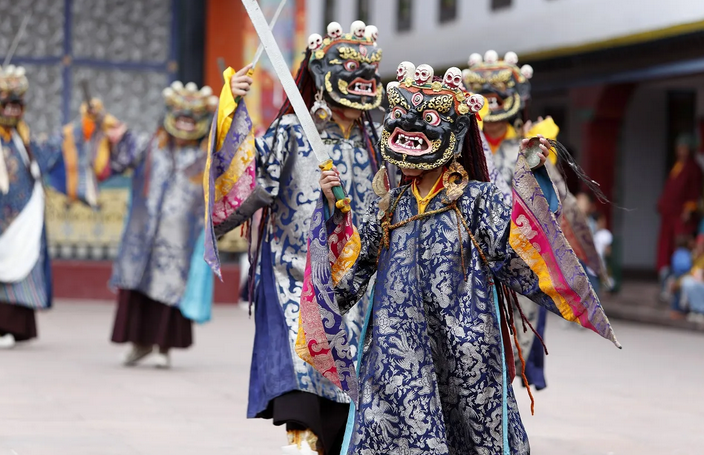
In the spiritual heart of the Himalayas, the Cham Dance Festival stands as one of the most powerful and visually striking expressions of Buddhist devotion. Performed by monks in monasteries across Sikkim, Cham is not merely a dance—it is a sacred ritual, a form of meditation, and a living representation of ancient spiritual philosophy.
Held during major festivals such as Losoong, Losar, Pang Lhabsol, Saga Dawa, and Bumchu, Cham transforms monastery courtyards into spaces of divine storytelling and spiritual cleansing.
Origins: A Dance Rooted in Buddhist Philosophy
Cham dances trace their origins to Vajrayana Buddhism and are closely associated with the teachings of Guru Padmasambhava, who is believed to have introduced tantric rituals to the Himalayan region.
The dances are based on:
- Sacred Buddhist texts
- Tantric rituals and symbolism
- Spiritual teachings of enlightenment and protection
Each performance is carefully preserved and passed down through generations of monks, maintaining its authenticity and sacred purpose.
The Symbolism of Masks and Costumes
One of the most captivating aspects of Cham is its elaborate visual presentation.
Key Elements:
- Masks: Represent wrathful deities, guardians, animals, and spiritual beings
- Costumes: Silk robes with vibrant colors symbolizing different energies
- Headgear: Ornate crowns and symbolic ornaments
Every detail carries meaning:
- Wrathful faces symbolize the destruction of evil
- Peaceful figures represent compassion and wisdom
- Animal forms reflect harmony with nature
The dancers do not perform as individuals—they embody divine forces.
Ritual Movements and Sacred Music
Cham is a highly disciplined ritual where every movement has spiritual significance.
Accompaniment:
- Cymbals
- Long horns (Dungchen)
- Drums
- Chanting of mantras
Purpose of Movements:
- Purify negative energies
- Drive away evil forces
- Restore balance and harmony
- Guide souls toward enlightenment
The slow, deliberate steps create a trance-like atmosphere, turning the performance into a moving meditation.
Spiritual Meaning and Purpose
Cham Dance is deeply symbolic and serves multiple spiritual functions:
1. Purification
It is believed to cleanse the environment of negativity.
2. Protection
Invokes protective deities to safeguard people and land.
3. Enlightenment
Represents the journey from ignorance to wisdom.
4. Triumph of Good Over Evil
Depicts the eternal victory of positive forces over darkness.
Cham in Sikkim’s Monasteries
Cham dances are performed in some of Sikkim’s most revered monasteries, including:
- Rumtek Monastery
- Pemayangtse Monastery
- Tashiding Monastery
These sacred spaces become vibrant centers of devotion during festivals, attracting both devotees and visitors.
A Unique Experience for Visitors
For those witnessing it for the first time, Cham Dance offers a rare and unforgettable experience:
- A blend of spirituality and visual grandeur
- A glimpse into ancient Himalayan traditions
- A moment of deep cultural connection
It is not staged entertainment—it is faith expressed through movement.
Preservation of Heritage
Cham Dance plays a vital role in preserving:
- Buddhist teachings and philosophy
- Monastic traditions
- Cultural identity of the Himalayan region
Monasteries continue to train young monks to ensure that this sacred art form remains alive for future generations.
Beyond Performance: A Living Meditation
Cham Dance transcends the idea of performance. It is a ritual where:
- Movement becomes prayer
- Sound becomes devotion
- Masks become symbols of divine presence
It reflects a worldview where spirituality is not separate from life—it is lived, seen, and experienced.
“Behind every mask lives a prayer.”