
In the quiet villages of Sikkim, beyond the well-known monasteries and grand festivals, lives a deeply rooted cultural tradition known as Barahimizong. Celebrated primarily among the Nepali-speaking Mangar (Rai) community, Barahimizong is a folk-religious festival that reflects ancestral beliefs, nature worship, and spiritual continuity.
Unlike mainstream festivals shaped by formal scriptures, Barahimizong survives through oral tradition, ritual practice, and collective memory, making it one of the most authentic expressions of indigenous culture in Sikkim.
Historical and Cultural Origins
Barahimizong has its roots in ancient animistic and tribal belief systems, which existed long before organized religion reached the Himalayan region. Over time, these indigenous practices blended with elements of Hindu traditions, creating a unique syncretic culture.
The term itself is often associated with:
- Worship of multiple deities (Barahi/Baraha forms)
- Ritual gatherings tied to seasonal cycles and protection rituals
- Community-based spiritual observances
This festival represents a worldview where nature, ancestors, and spiritual forces are interconnected.
Spiritual Philosophy: Nature, Ancestors, and Protection
At its core, Barahimizong is based on three fundamental beliefs:
1. Nature as Sacred
Mountains, forests, rivers, and land are not just resources—they are living spiritual entities.
2. Ancestors as Guardians
Ancestors are believed to continue guiding and protecting the living. Rituals honor their presence and seek their blessings.
3. Deities as Protectors
Local village deities are invoked to safeguard:
- Crops and agriculture
- Livestock
- Health and well-being
- Protection from disasters and misfortune
This belief system reflects a holistic understanding of life, where spiritual balance ensures physical well-being.
Ritual Structure and Ceremonial Practices
Barahimizong is not celebrated on a fixed universal date—it varies by village, often based on local traditions, agricultural cycles, or spiritual calendars.
Pre-Festival Preparations:
- Cleaning and preparing sacred spaces
- Gathering ritual items such as grains, flowers, and offerings
- Inviting community elders and traditional priests
Main Ritual Ceremony:
Led by elders or local priests (often known as dhami/jhankri in some traditions), the ceremony includes:
- Invocation of deities and ancestral spirits
- Chanting of traditional prayers and mantras
- Offering of food, grains, and symbolic items
- Ritual blessings for the community
These ceremonies are performed with deep discipline and respect, maintaining traditions passed down for generations.
Symbolism Through Dance, Music, and Expression
Barahimizong is not only spiritual—it is also deeply expressive.
Cultural Elements:
- Folk Music: Traditional instruments and songs narrating stories of ancestors and nature
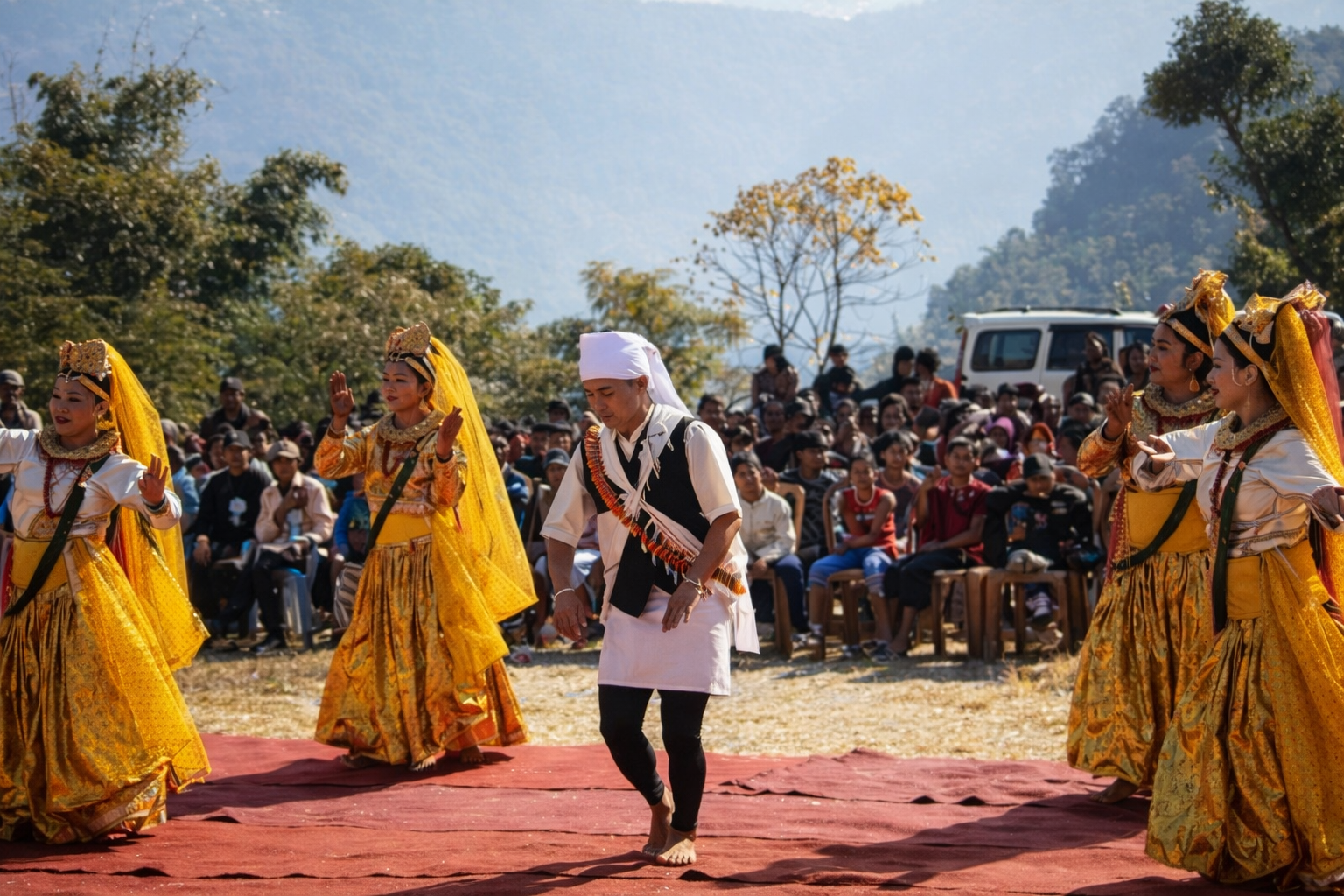
- Ritual Dances: Symbolic movements representing protection, strength, and harmony
- Oral Narratives: Stories and chants that preserve history and belief
Unlike stage performances, these expressions are sacred acts, meant to connect the community with the spiritual world.
Community and Social Importance
Barahimizong plays a crucial role in strengthening rural society.
Community Functions:
- Reinforces unity and shared identity
- Encourages participation across generations
- Acts as a platform for passing down traditions
In villages, the festival becomes a moment where individual lives merge into a collective cultural experience.
Connection with Agriculture and Survival
The festival is closely tied to the agrarian lifestyle of rural Sikkim.
It reflects concerns such as:
- Protection of crops from natural calamities
- Fertility of land and seasonal balance
- Livelihood security for farming communities
This makes Barahimizong both a spiritual ritual and a survival tradition.
Barahimizong in the Modern Era
In today’s fast-changing world, Barahimizong faces challenges:
- Declining practice among younger generations
- Lack of written documentation
- Influence of modernization and urbanization
Yet, in many rural areas, the festival continues to thrive—thanks to elders and communities committed to preserving their heritage.
There is a growing recognition that such festivals are:
- Vital to cultural identity
- Important for anthropological and historical study
- Essential for maintaining diversity in traditions
A Living Heritage of Sikkim
Barahimizong represents a side of Sikkim that is often unseen but deeply meaningful. It is a tradition that does not rely on grandeur, but on belief, continuity, and collective memory.
It reminds us that culture is not always written—it is lived, practiced, and preserved through time.
Beyond Celebration: A Philosophy of Life
Barahimizong teaches a timeless message:
- Respect nature
- Honor ancestors
- Live in harmony with your surroundings
In a world moving rapidly toward modernity, it stands as a quiet yet powerful reminder of where we come from.
“Not written in books, but remembered in practice.”