Khandu Wangchuk Bhutia: The Living Legacy of Thangka Art in Sikkim

Preserving Sacred Traditions Through Brush, Gold, and Devotion

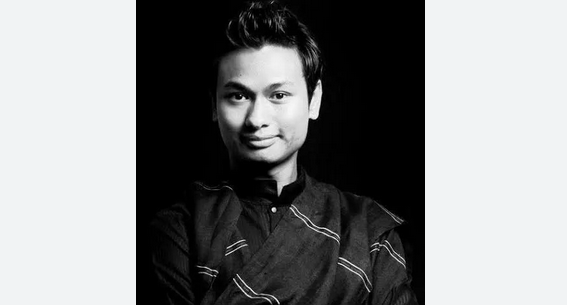
In the quiet hills of Sikkim, where spirituality and art intertwine, one name stands as a guardian of an ancient traditionβ€”Khandu Wangchuk Bhutia. A master of Thangka painting, Bhutia has dedicated his life to preserving one of the most intricate and spiritually significant art forms of the Himalayan world.

Honored with the prestigious Padma Shri in 2022, his journey reflects not only artistic excellence but also a lifelong commitment to cultural preservation.

Roots in Faith and Tradition

Born in 1959 in Sakyong, West Sikkim, Khandu Wangchuk Bhutia grew up in an environment deeply connected to Buddhist spirituality. He is the son of the revered Jigme Wangchuk Lama (Dungzin Rimpoche), a respected spiritual figure associated with the historic Pemayangtse Monastery.

His early education at government schools in Pelling and Namchi laid the foundation of his academic life. However, it was his ordination into monastic life at Pemayangtse that truly shaped his destiny. Within the monastery’s sacred walls, he began his lifelong journey into the world of Thangka art.

Mastering the Sacred Art of Thangka

Thangka painting is not merely artβ€”it is a discipline governed by strict spiritual and geometric principles. Every line, color, and proportion follows centuries-old Buddhist iconometric guidelines.

Under the guidance of renowned masters such as:

  • Dungzin Rimpoche
  • Phuntsok Sangpo
  • Zapa Acho

Bhutia refined his craft with patience and devotion.

His artistic style is distinguished by:

  • Intricate Buddhist iconography
  • Use of 99% pure gold outlines
  • Natural pigments derived from elements like red coral and black stones

Each Thangka he creates is not just a painting, but a spiritual narrativeβ€”depicting deities, mandalas, and teachings of Buddhist philosophy.

A Center for Heritage and Learning

Since 1982, Bhutia has been running the Kanchenjunga Handicraft Center in Ale Danda, South Sikkim. This institution is more than a workspaceβ€”it is a living school of Himalayan art.

Through this center, he has:

  • Trained over 350 students
  • Preserved traditional crafts like wood carving and carpet weaving
  • Passed on knowledge that might otherwise have faded with time

His role as a mentor ensures that the sacred tradition of Thangka painting continues across generations.

Recognition and National Honor

Khandu Wangchuk Bhutia’s contributions have earned him widespread recognition, including:

  • Padma Shri (2022)
  • National Award for Handicrafts
  • Kala Nidhi Award
  • India Excellence Award

These honors acknowledge not only his artistic mastery but also his role as a cultural ambassador of Sikkim and the Himalayan region.

Art as a Spiritual Journey

For Bhutia, art is not about speed or fameβ€”it is about patience, discipline, and inner reflection. His philosophy captures the essence of his work:

β€œEvery canvas carries a journeyβ€”of thought, struggle, patience, and discovery. Visual art is not rushed; it unfolds slowly, rewarding those who truly look.”

This perspective transforms his work into a bridge between art and meditation, where each creation becomes a sacred offering.

Legacy and Cultural Impact

In an era of rapid modernization, Khandu Wangchuk Bhutia stands as a protector of heritage. His work ensures that:

  • Traditional Himalayan art remains alive
  • Spiritual knowledge continues through visual storytelling
  • Younger generations stay connected to their roots

His legacy is not just in the paintings he creates, but in the hundreds of artists he has inspired and trained.

Khandu Wangchuk Bhutia’s life is a testament to dedication, discipline, and devotion. Through his art, he has preserved a sacred tradition and elevated it onto the national stage.

In every brushstroke, there is history.
In every color, there is faith.
And in every Thangka, there is a story that transcends time.

β€œIn preserving tradition,

he paints not just imagesβ€”
but the soul of a civilization.”

Leave a Reply